DTF Printing vs Screen Printing: Which is Better for Your Event?
You've designed the perfect shirt for your conference. Now you're staring at two quotes: one says 'DTF printing,' the other says 'screen printing.' The prices are different, the minimums are different, and you have no idea which one actually makes sense for your event...
What is DTF Printing?
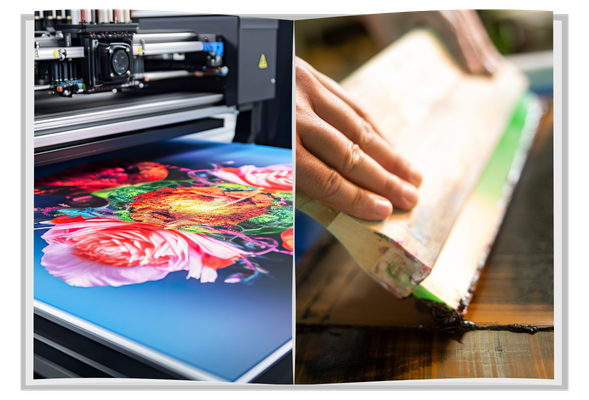
DTF stands for Direct-to-Film printing, a relatively new digital printing method that's changed how custom apparel works for small and medium orders.
Here's how it actually works:

When you receive your shirt, the design sits on top of the fabric rather than soaking into it. You can feel a slight texture if you run your hand over the print, though modern DTF transfers are much thinner than older methods.
DTF is a digital process, meaning your design file goes straight from computer to printer without any physical setup required. This is crucial for understanding why costs work differently than traditional methods.
Key advantages: no color limitations (print full photos if you want), no physical screens needed (reduces setup costs), works on cotton and polyester equally well, and easy to print different designs in the same production run.
What is Screen Printing?
Screen printing has been the industry standard for custom apparel for over 100 years, and for good reason.
The process requires creating a physical screen for each color in your design. Think of a screen as a stencil. Ink gets pushed through the open areas of the screen onto your shirt, leaving your design behind. If your logo has three colors, you need three separate screens and three separate ink applications.

The setup process takes time: create screens, register them so colors align properly, mix ink to match your brand colors, and test print to ensure everything looks right. Once setup is complete, production runs very efficiently because you're just pushing ink through existing screens.
When you receive your shirt, the ink has penetrated into the fabric fibers. You might feel slight texture depending on ink type and application, but modern screen printing can achieve very soft prints.
Key advantages: proven long-term durability, vibrant solid colors, cost-effective for large quantities, professional standard for corporate and athletic uniforms, and screens can be saved for exact reorders.
Quality & Durability
Print Detail
DTF: Photo-quality detail, unlimited colors, perfect gradients and fine lines.
Screen: Bold vibrant colors, sharp edges, limited detail on complex work.
Complex logos and photos need DTF. Simple bold graphics excel with screen printing.
Durability
Screen printing: 50+ year proven track record, lasts 50+ washes easily.
DTF: Modern professional DTF lasts 40-50+ washes when done right.
Both last if done professionally. Poor execution fails with either method. Quality comes from printer expertise, not just the method.
Hand Feel
DTF: Slight texture you can feel, thin and flexible.
Screen: Ranges from soft to slightly textured depending on ink type.
Neither is objectively better—personal preference.
Design Complexity: Which Method Handles What
DTF is Required For:
- Full-color photographs
- Complex gradients and color blends
- Designs with 6+ colors
- Fine detail and small text
- Different designs per shirt (names, numbers)
Screen Printing Excels At:
- Bold logos in 1-3 colors
- Large solid color areas
- Simple text-heavy designs
- Vintage/retro aesthetic
Example scenarios:
Company logo with gradient background → DTF
School mascot in 2 colors → Screen printing
Team jerseys with individual names → DTF
Simple event logo → Screen printing
Speed & Flexibility
DTF advantages: No screen creation delay, easy design changes, individual customization, simple reordering.
Screen printing advantages: Efficient high-volume production, saved screens for reorders, lower per-unit cost at scale.
Real scenario: Conference has 50 confirmed attendees, then 20 more register late. DTF adds them easily. Screen printing may require minimums or premium pricing for small additions.
Common Myths
"Screen printing always lasts longer" — Modern professional DTF lasts just as long. Quality execution matters more than method.
"DTF looks plasticky" — Poor DTF does. Professional DTF with modern materials looks excellent and feels flexible. At Studio Mohar, we press the print with a special film on top that presses the prints deep into the fibers..
"Screen printing is always cheaper" — Only true for 200+ shirts with simple designs. Small runs cost more due to setup fees.
Final Recommendation
Neither method is universally better. Your decision depends on quantity, design complexity, budget, and timeline.
Most events under 100 benefit from DTF's flexibility and no-minimums approach. Large events with simple branding save money with screen printing. Between 50-200? Compare actual quotes for both.
Action steps:
- Count actual attendance (don't pad for minimums)
- Assess design complexity (colors, gradients, detail)
- Determine timeline (rush or standard)
- Use decision framework above
- Get real quotes for your specific situation
Unsure? Talk to a printer who offers both methods and get honest guidance based on your needs, not their equipment limitations.
Ready to see exact pricing? Our calculator shows real costs for DTF and we do not charge any setup fee for screen printing for orders over 50 pieces.
Discuss Your Event → https://studiomohar.ca/contact_sales/
Every great shirt starts with "what if..."
What if your logo looked that good on a hoodie? What if your inside joke became your team uniform? What if premium quality didn't mean premium hassle? Try our design studio and find out. Choose, customize, order. We handle the rest
Start Your What If!